
Contract cleaning, London and Surrey
A cleaning contract should make running your premises easier. We plan contract cleaning around how your building is actually used, set it out in a specification, and give you one named contact to run it.
- Daily, weekly and bespoke schedules
- One named contact

Accreditations and insurance



- £10 million coverPublic liability and employers liability
- DBS checkedEvery member of staff
- CSCS cardholdersTrained to work on building sites
- CIS registeredConstruction industry scheme
A programme, not one-off cleans
Contract cleaning is an ongoing agreement between an organisation and a professional cleaning contractor.
Instead of arranging individual cleans as you need them, you agree a regular programme that sets out the tasks to be completed, how often, the working hours and what you can expect from the service.
A contract can also combine routine cleaning with planned periodic work such as commercial carpet cleaning, window cleaning, deep cleaning or floor maintenance, so the jobs that come round less often are booked in rather than remembered.
That makes contract cleaning useful for any organisation that needs a consistent standard without organising and managing every visit separately. You should know what is being cleaned, when tasks will be done, who manages the service and how standards are checked. When your needs change, the contract changes with them, without starting again.
When cleaning can happen
- Daily
- Several times per week
- Weekly
- During evenings
- Early in the morning
- During weekends
- During daytime operating hours
- At different frequencies across different areas
Designed around your premises
No two cleaning contracts should be identical. A busy headquarters may need daily cleaners and daytime support; a smaller hybrid office may need cleaning only a few times a week.
What we look at before we write a contract
- Size and layout of the premises
- Employee and visitor numbers
- Operating hours
- Building occupancy
- Areas with the greatest footfall
- Number of kitchens and washrooms
- Floor types
- Security and access requirements
- Required cleaning frequencies
- Waste and recycling arrangements
- Specialist cleaning requirements
- Existing service standards
- Periodic cleaning requirements
- Health and safety considerations
- Budget and operational priorities
We use this to write a cleaning specification for your individual site.
Cleaning specification
Three example lines| Area | Task | How often |
|---|---|---|
| Washrooms | Cleaned | Daily |
| Meeting-room glazing | Cleaned | Weekly |
| Carpets | Professionally cleaned | At agreed intervals |
A full specification also sets out
- Individual areas to be cleaned
- Cleaning hours
- Areas excluded from the contract
- Products and equipment
- Consumable requirements
- Waste-management responsibilities
- Periodic services
- Site-specific procedures
- Security requirements
What a contract can include
Each activity is scheduled at the frequency it is actually needed, from the nightly clean to the carpets once or twice a year.
Routine cleaning
- Office and workstation cleaning
- Reception cleaning
- Meeting room cleaning
- Kitchen and breakroom cleaning
- Washroom cleaning
- Vacuuming
- Hard-floor cleaning
- Touchpoint cleaning
Waste, supplies and daytime cover
- Waste removal
- Recycling management
- Consumable replenishment
- Daytime cleaning
- Porter services
Periodic and specialist
- Carpet cleaning
- Window cleaning
- Deep cleaning
- Floor care and restoration
- Sanitisation and disinfection
- Periodic specialist cleaning
Washroom hygiene
Sanitary bins, toilet vending machines, air freshener systems, urinal cubes and sanitisers, and sharps and clinical waste bins, with waste transfer documents supplied as standard.
Waste management
Mixed recycling, waste collection and disposal and confidential waste, properly segregated, with reports that show how much waste your premises produce and recycle.
Contract supplies
Hand soap, paper towels, toilet rolls, air freshener, bin liners and kitchen supplies, delivered and topped up as part of your regular cleaning contract.
Premises we clean on contract
Contracts adapt to a wide range of commercial and organisational buildings across London and Surrey.

Offices and corporate workplaces
Desks, meeting rooms, kitchens, reception, washrooms and floors. Larger offices may add daytime cleaners or porters; hybrid offices can set frequencies around peak days.
Schools and educational premises
Classrooms, corridors, toilets, staff areas and dining spaces, with schedules adapted around term dates and holidays.
Universities
Lecture rooms, offices and busy public areas, each part of a large site cleaned at its own frequency.
Warehouses and industrial buildings
Hard-wearing floor and surface cleaning alongside staff offices, toilets and kitchens, with periodic deep cleans built in.
Healthcare and clinical environments
Careful hygiene procedures and clearly defined responsibilities, specified to the premises and the service level required.
Retail and customer-facing premises
Presentable entrances, floors, counters and washrooms, cleaned outside opening hours or supported by daytime housekeeping.
Property and facilities management
Routine and specialist work across several buildings brought into one organised contract, coordinated by area or by site.
From appointment to first clean
The weeks between appointing a new contractor and the first day of service decide how well it goes. We plan them step by step.
Site assessment
Layout, usage, access, surfaces and your current cleaning arrangements.
Confirm the specification
Tasks and frequencies agreed for each area.
Agree cleaning hours
Times set around occupancy, opening hours, security and operations.
Staffing planning
The team the specification needs, including any TUPE considerations.
Equipment and materials
The right equipment, products and consumables organised.
Site procedures
Access and keys, alarms, waste locations, storage, restricted areas and site contacts.
Management and communication
You know who oversees the account and how to raise a query or an urgent issue.
Service starts
Cleaning begins to the agreed schedule and specification.
Initial review
Early on, we confirm staffing, frequencies and tasks are working in practice.

Your dedicated account manager
Good contract cleaning depends as much on communication as on cleaning. Your named contact keeps the contract on track, so you never explain your site twice.
- Oversees service delivery and coordinates the teams
- Monitors the specification and reviews standards
- Manages quality audits and reviews KPIs
- Arranges extra work and responds to concerns
Changing contractors and TUPE
TUPE is the Transfer of Undertakings (Protection of Employment) Regulations. Where it applies, staff assigned to your current contract may transfer to the incoming provider, so changing company does not always mean a new team.
That does not mean cleaning cannot improve. Problems with a previous contractor often come from a poorly defined specification, too little supervision, the wrong frequencies or no performance monitoring, and a new contractor can fix those with stronger management, clearer specifications, training and structured quality checks.
We plan transitions carefully when TUPE is involved. It is employment law and every case differs, so take professional advice where you need it.
How standards are measured
A service level agreement turns “good cleaning” into defined requirements. Key performance indicators then show whether those standards are being kept.
Cleaning quality scores
Regular inspections check each area against the agreed standard.
Attendance
Shift cover is monitored so the service stays consistent.
Audit results
Scores show excellent work and areas to improve.
Issue resolution
When you raise a concern, the response and the fix are tracked.
Scheduled tasks completed
Carpet cleans, floor treatments and deep cleans checked against the programme.
Consumables
Stock levels and replenishment, where supplies are part of the contract.
Client feedback
Regular conversation, the plainest sign the service still fits.
Monthly quality audits
On managed contracts, monthly quality audits can be built in where appropriate. They cover:
- Washroom standards
- Kitchens
- Workspaces
- Floors
- Reception and communal spaces
- High-touch areas
- Waste management
- Completion of scheduled tasks
- General presentation
Findings are recorded, discussed and acted on. Buildings change too: staff numbers grow, rooms change purpose, quiet areas get busy. An audit shows when the specification itself needs adjusting, not only whether the cleaners followed it.
Is your current contract still working?
Already have a cleaning provider? Answer these ten questions about your arrangement and see where the gaps are.
- Is there a clear cleaning specification?
- Are scheduled tasks consistently completed?
- Are cleaning frequencies still appropriate?
- Do you know who manages your account?
- Are standards inspected regularly?
- Do you receive useful feedback or reporting?
- Are service problems dealt with effectively?
- Can additional requirements be arranged easily?
- Have your premises changed since the contract started?
- Does the service still meet the needs of your organisation?
Your contract check
0 of 10 answered, 0 gaps
If several of these questions reveal gaps, it may be time to review the specification or consider an alternative contractor.
What contract clients say
As well as offering an excellent weekly cleaning service, they have been accommodating in organising additional tasks such as last-minute carpet cleans and a reliable feminine hygiene service. We have used a few cleaning companies over the years, but it is true when they say they offer a full and professional service.
BFA staff always pleased to help at short notice. They do a very professional job, and Paul is always so helpful and supportive. Would recommend to anyone 100% - Top job.
Contract cleaning questions
We support organisations across London and Surrey from our offices in London and in Hersham, Surrey.
What does a contract cleaning service include?
Dusting, vacuuming, sanitising, waste removal and washroom cleaning as standard, and it can include specialist services such as carpet, window or deep cleaning.
How often should my business schedule contract cleaning?
It depends on your business and its foot traffic. Offices may need daily or weekly cleaning, while busier spaces such as retail or healthcare often need daily cleaning to stay hygienic.
Are your cleaning products safe and eco-friendly?
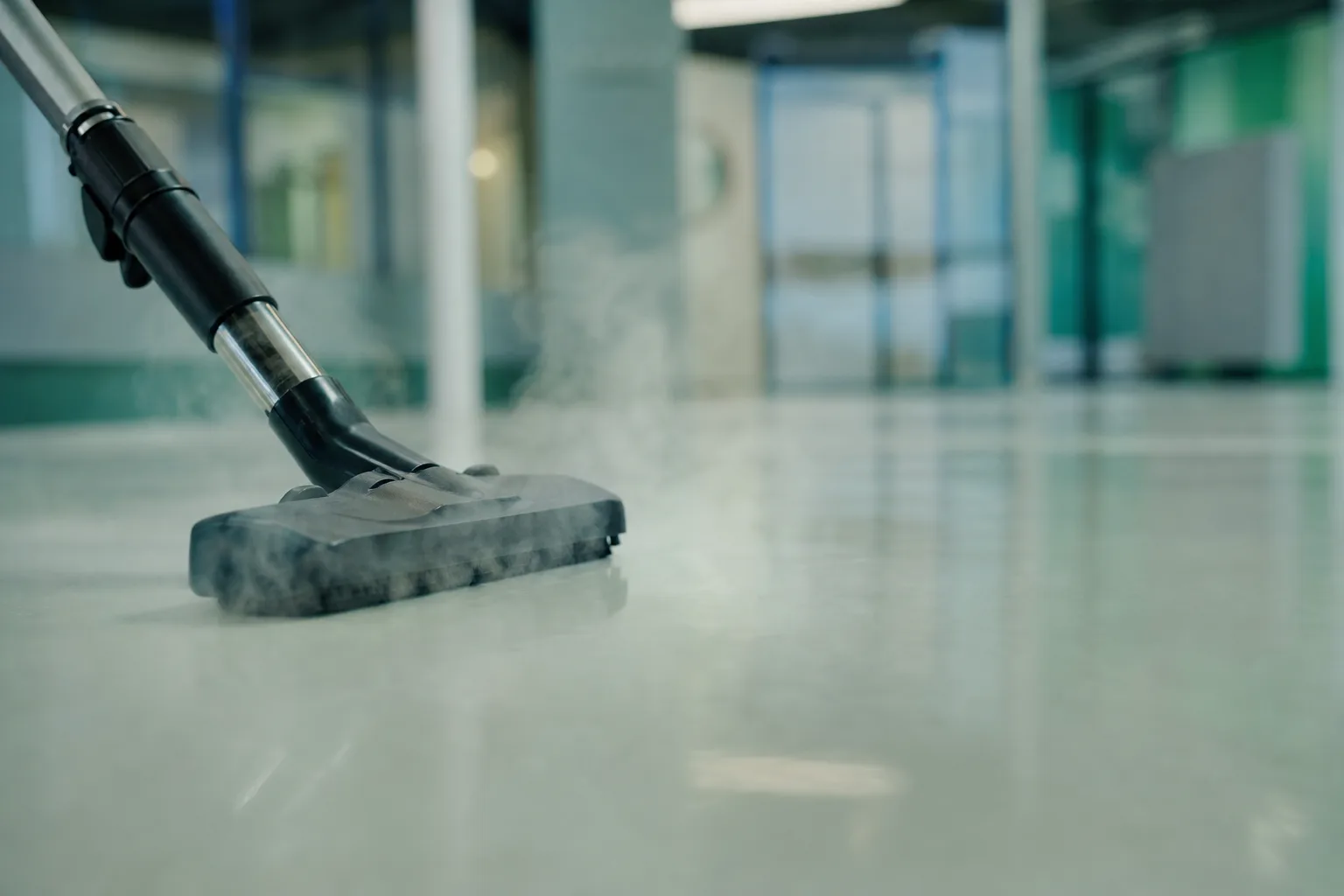
Yes. We use eco-friendly, non-toxic products that are safe for people and the environment, and 67% of our cleaning is chemical-free, using bio cleaning agents and steam.
Can you clean outside of business hours?
Yes. We offer early-morning, evening and weekend cleaning to keep disruption to your business to a minimum.
We want to change provider. What happens?
We plan the mobilisation with you, review why the current arrangement is not working, and talk through any TUPE considerations, so the new service is ready before the first clean.
How do I get a quote for contract cleaning?
Book a free site visit. We assess your premises and your needs, then give you a tailored quote.
Book a free site visit
Appointing a contractor for the first time, reviewing a contract or changing provider: we walk the building with you and come back with a specification and a quote.
- £10 million liability cover
- DBS-checked staff
- One named contact
Already a client, or prefer to pick a time yourself? Book a visit in the client portal